


DC Chargers
MaxiCharger Gen2 80kW – 160kW DC
A high-performance DC rapid charger for en-route, pay-to-charge forecourts and public spaces, with 99% uptime, built for heavy usage and scalable power for future expansion.
- Easy installation & maintenance
- Multi-site Management
- 99% product reliability
- Flexible solutions
- Universal compatibility
- 2 year warranty


Technical Specifications
MaxiCharger Gen2 80kW – 160kW DC
- Width
- 782mm
- Height
- 2150mm
- Depth
- 480mm
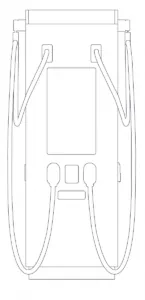
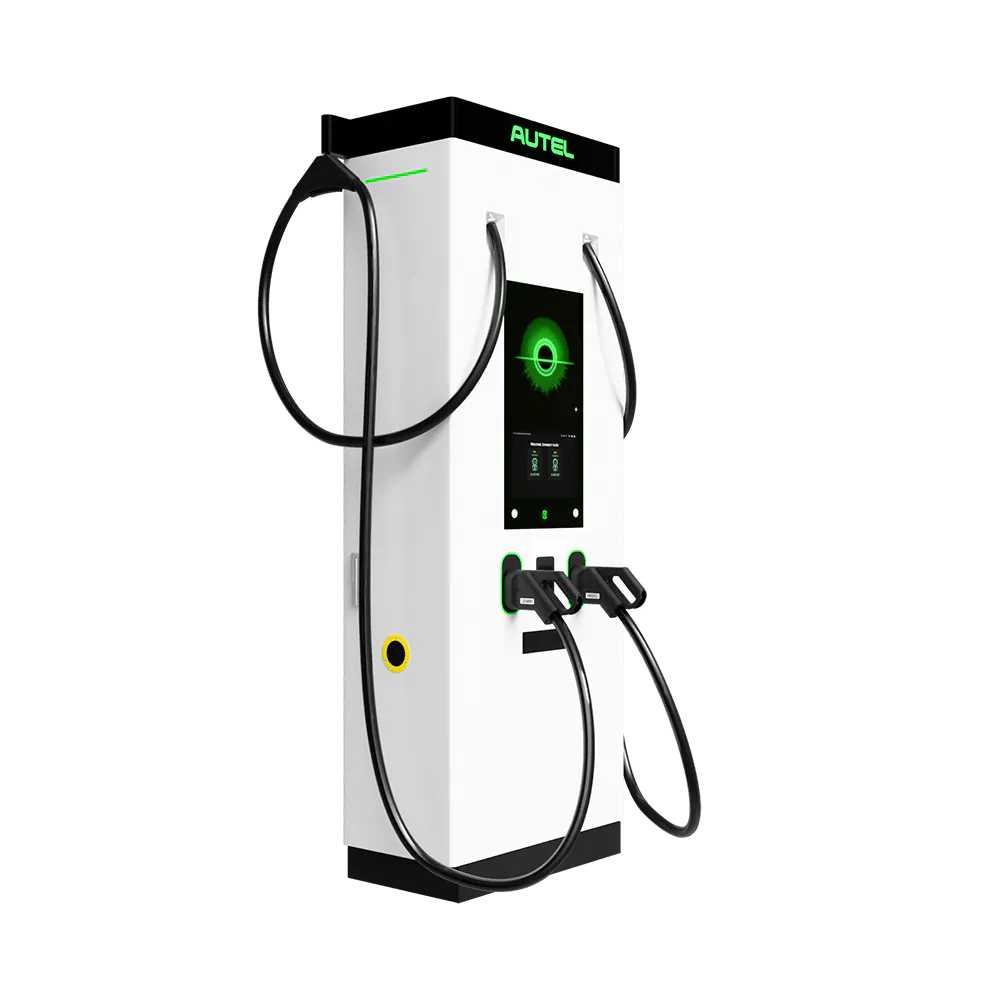
Rapid charging. Made easy
Rapid charging and simple management. A reliable and robust DC rapid charger capable of charging all EVs on the market. Featuring a scalable modular architecture, power can be upgraded up to 240kW as future demand increases. Designed for public en-route charging, it delivers the performance and reliability required for heavy-use locations.
Available with the optional cable management system for a tidier installation.
Benefits
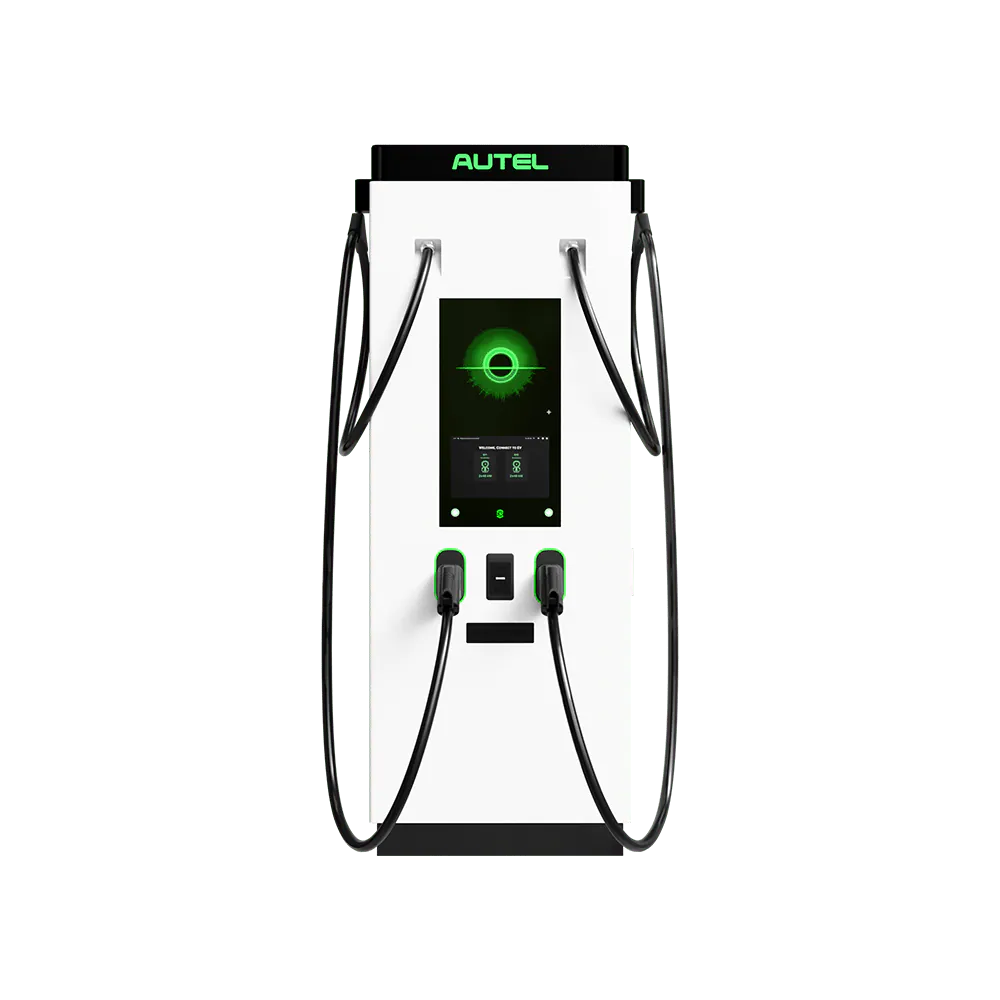
- Load Balancing – Optimises power output based on site conditions, connected vehicles and available capacity to protect the power supply.
- Rapid Charging – Faster charging to ensure your customers come back.
- Dual Outputs – Dual left and right sockets deliver simultaneous high-power charging for adjacent parking bays.
- Tap & Charge (RFID) – RFID tap-to-start, user identification, contactless payment and configurable billing.
- MID Meter – MID-approved meter built in for billing-grade accuracy – displays pence per kWh (±1%).
- Advertising Screen – 21.5-inch LCD advertising touchscreen for additional revenue opportunities.
- OCPP Integration – Seamless OCPP 1.6/2.0 for back-office software integration & remote diagnostics.
- Fully Compliant – Your MaxiCharger is fully compliant with the electric vehicle regulations.
- 2 Year Warranty – Covered by a 2-year warranty as standard.
Site-wide Management
SmartBox provides central connectivity and real-time energy monitoring, enabling intelligent load balancing across every charger on site. SmartMesh (Wi-SUN) creates a robust site-wide communication network without extensive additional infrastructure, so a whole site can be deployed, configured and commissioned simultaneously from a single system. SmartCloud lets asset controllers apply settings, billing structures and user permissions, manage on-screen advertising, and monitor usage, performance and costs network-wide.
FAQ
Sevadis recommends matching the charging solution to the expected dwell time, driver requirements and energy demand at the location.
AC charging is well suited to longer-stay destinations where vehicles may be parked for several hours, while DC charging provides faster energy recovery where drivers need to continue their journey sooner.
For many destination charging scenarios, the DC Compact range is particularly well suited to dwell times of around 1–2 hours, for example, while visiting a restaurant, shopping centre or leisure destination. This can provide drivers with a substantial amount of additional range during their visit without needing to wait for a full charge.
For en-route charging, where drivers typically want to charge and continue their journey as quickly as possible, a higher-powered DC solution is more appropriate. Outputs of around 200–280kW can provide rapid charging for a wide range of compatible passenger EVs, making them well suited to service stations, roadside charging hubs and other short-dwell locations.
The wider charging service should also consider payment, user access, monitoring and ongoing support through a compatible charge point operator or back-office platform. Advertising screens may also be considered for additional commercial value.
Ultimately, charger selection should be based on the site’s electrical capacity, expected dwell time, vehicle requirements, customer needs and commercial model.
Charging requirements depend heavily on vehicle dwell time and available electrical capacity. For overnight depot charging, a 22kW MaxiCharger Smart AC can deliver approximately 220kWh over a 10-hour period, while a 50kW DC Compact could theoretically deliver up to 500kWh over the same period, subject to vehicle and site limitations.
Where vehicles need to return to service quickly, the DH 80–240kW and DH 280– 480kW DC ranges provide the higher charging power required for commercial fleets, logistics operations and heavy-duty vehicles.
Charging time depends on the energy required, the truck’s maximum charging rate, its charging curve and the power available from the charger and site.
As a simple example, an e-HGV with a 600kWh battery connected to a 480kW DC charger could theoretically charge from 0–100% in around 75 minutes if 480kW were delivered continuously.
In practice, charging will take longer as vehicles do not typically maintain their maximum charging rate throughout the entire session. Equally, most fleet vehicles will not arrive completely empty or need to charge to 100%.
For example, charging the same 600kWh battery from 20–80% requires around 360kWh of energy, which at a constant 480kW would theoretically take around 45 minutes.
Sevadis recommends designing e-HGV charging around the specific vehicle, daily energy requirement, dwell time and duty cycle, rather than selecting infrastructure based on charger power alone.
Not every application requires MID-certified metering, but it becomes particularly important where the electricity consumed through the charger needs to be measured accurately for billing, reimbursement or commercial reporting. Compatible MaxiCharger LCD models incorporate MID-certified metering to support these applications
Autel’s EV charging portfolio extends to solutions capable of delivering up to 1.2MW, supporting the next generation of electric trucks and heavy commercial vehicles. Most current EVs and e-HGVs are typically limited to substantially lower charging rates, with available grid capacity often becoming the limiting factor before the charger itself.
For today’s UK market, the DH 400kW represents a powerful ultra-rapid solution, combining high charging performance with modular power architecture that enables
capacity to increase as future requirements evolve.
Several Sevadis chargers feature large LCD screens capable of displaying advertising, promotional and branded content.
The MaxiCharger Gen2 AC LCD provides a large-format screen for commercial, workplace, retail and public charging locations, while the Sevadis DC range also features integrated LCD displays.
For public and destination charging, the DC Compact and DC DH 80–240kW are particularly well suited, combining faster DC charging with prominent screens that can be used to display advertising, promotions and branded content while customers charge.
This gives site operators an additional customer touchpoint and the opportunity to promote their own products and services or generate advertising revenue from the charging infrastructure.
For sites that do not require advertising functionality, the MaxiCharger Gen2 Digital provides a smaller display focused primarily on charging information and user interaction.
OCPP stands for Open Charge Point Protocol and is an open communication standard that allows EV chargers to connect and communicate with compatible charging management and back-office platforms.
Sevadis MaxiChargers use OCPP connectivity through SmartCloud, giving customers the flexibility to choose a compatible back-office provider rather than being tied to a single software platform.
Depending on the chosen provider, this can enable services such as payments and tariffs, user management, energy reporting, charger monitoring, fleet management and multi-site control.
This open approach gives businesses and charge point operators greater choice, flexibility and control over how their charging network is managed.
EV charger load balancing controls how available electrical capacity is shared between charge points. Dynamic load balancing also monitors wider site demand and adjusts charging power as that demand changes. Sevadis MaxiCharger Gen2 supports load-management arrangements including SmartBox for site energy monitoring. This can help a site accommodate more charging bays within its available capacity, subject to the vehicles’ energy and parking requirements.