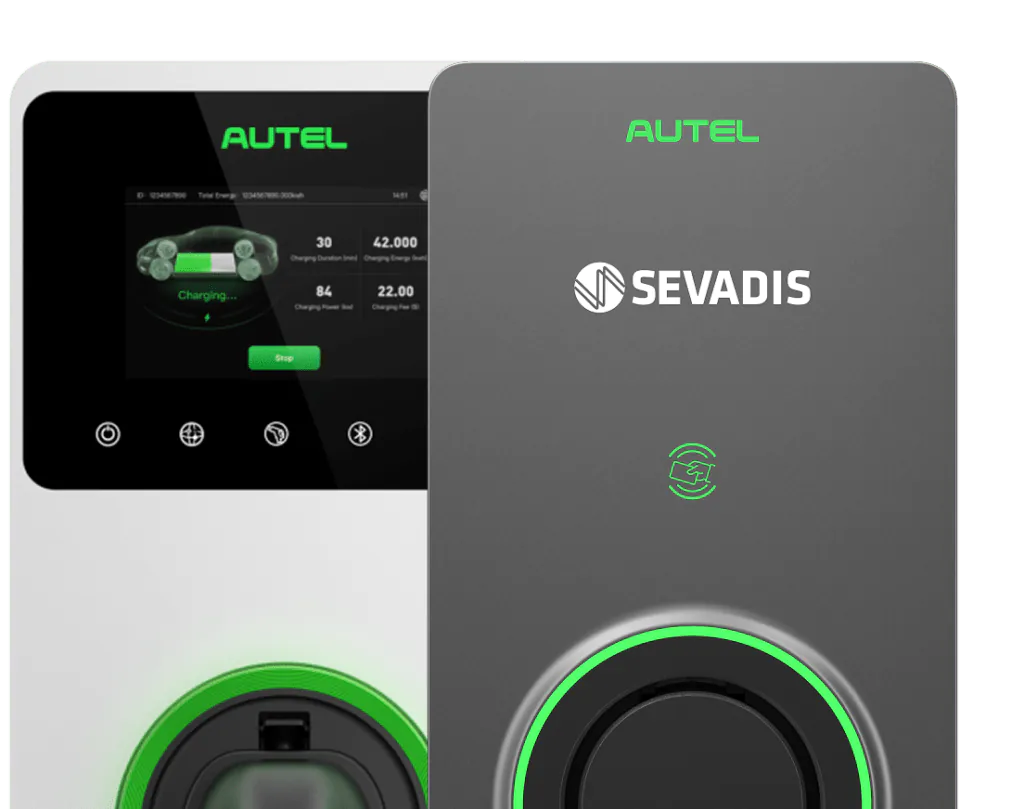
DC Chargers
MaxiCharger Gen2 50kW DC Compact
A reliable, high-performance DC charger designed for short-stay destination charging, ideal for retail, leisure and shopping locations where drivers expect to return to a fully charged vehicle
- 2 Year Warranty
- Universal Compatability
- Smart App Controlled
- Product Reliability
- Flexible Solutions
- Easy Charger Installation


Technical Specifications
MaxiCharger Gen2 50kW DC Compact
- Width
- 550mm
- Height
- 1565mm
- Depth
- 265mm
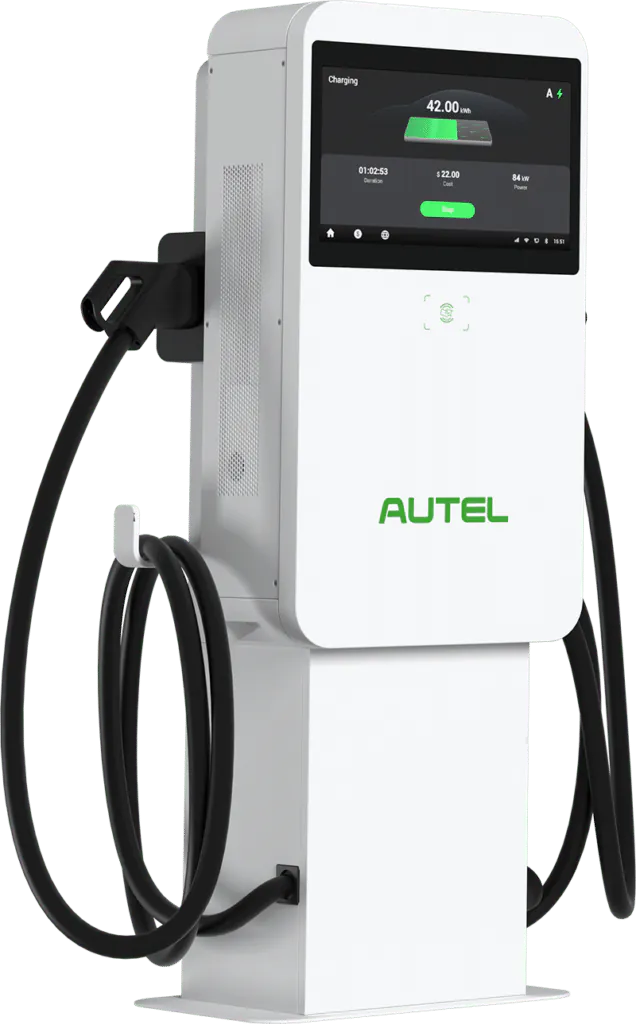
Big charging. Small footprint.
The Autel DC Compact delivers 50kW of rapid EV charging power in a space-saving design. Built for depots, fleets, workplaces and public spaces, it provides reliable, high-performance DC charging without taking up valuable space.
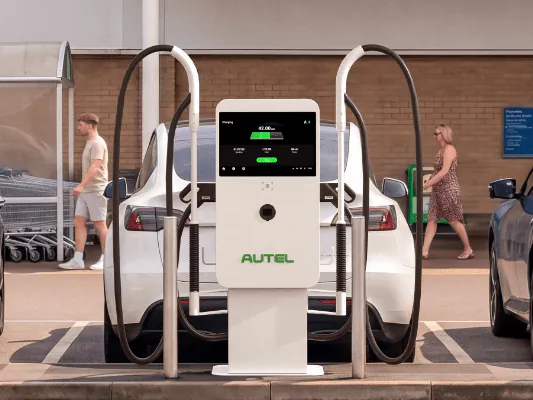
Capable of delivering up to 130km of range in around 30 minutes, it’s ideal for destination charging at retail parks, leisure centres, gyms and restaurants, allowing drivers to top up while going about their day.
Available with the optional cable management system for a cleaner, tidier installation.
Need more power? View our full range of DC & High Powered EV chargers
Benefits
- Load Balancing – Optimises power output based on site conditions, connected vehicles and available capacity to protect the power supply.
- Rapid Charging – Faster charging to ensure your customers come back.
- Dual Outputs – Left and right sockets for dual parking bays, delivering up to 50kW simultaneously to each vehicle.
- Tap & Charge (RFID) – RFID tap-to-start, user identification, contactless payment and configurable billing.
- MID Meter – MID-approved meter built in for billing-grade accuracy – displays pence per kWh (±1%).
- Advertising Screen – 21.5-inch LCD advertising touchscreen for additional revenue opportunities.
- OCPP Integration – Seamless OCPP 1.6/2.0 for back-office software integration & remote diagnostics.
- Fully Compliant – Your MaxiCharger is fully compliant with the electric vehicle regulations.
- 2 Year Warranty – Covered by a 2-year warranty as standard
On-screen Advertising
Unlock a new revenue stream from your EV charging network. Every driver interacts with the display to start and monitor their charging session, delivering guaranteed screen time and exceptional brand visibility.
FAQ
Yes, an 11kW AC charging limit does not mean your vehicle is also limited to 11kW on DC. AC charging uses the vehicle’s onboard charger to convert electricity into DC for the battery. Its capacity determines the maximum AC charging rate.
A DC rapid charger performs that conversion outside the vehicle, bypassing the onboard AC charger. The vehicle’s separate DC charging limit then applies.
For example, the BMW i4 eDrive40 supports up to 11kW AC and 205kW DC. Actual DC charging power varies with battery charge level, temperature and available charger power.
Sevadis recommends checking both vehicle charging limits when choosing between AC and DC charging.
Start by understanding the fleet’s energy requirements, daily mileage and the amount of time vehicles are parked, then compare this with the electrical capacity available at the depot.
Sevadis can help specify the right combination of AC and DC charging with intelligent load management, optimising how available power is distributed across the charging network.
By combining load balancing, charging schedules, solar and battery storage, sites can make better use of their existing electrical capacity and potentially support more vehicles without immediately requiring a supply upgrade.
Where additional capacity is required, this can be identified during the site design process and incorporated into the wider electrification plan.
Sevadis recommends matching retail and leisure charging to the time customers spend on site. MaxiCharger Gen2 AC can suit longer visits, while DC charging may better serve customers needing more energy during a short stop. A compatible back office can support paid charging and public visibility. Site capacity, parking turnover and expected vehicle use should guide the final specification.
The MaxiCharger AC range is ideally suited to destinations such as hotels, restaurants, shopping centres and leisure venues where vehicles typically remain parked for longer periods.
For locations requiring faster turnaround, the 50kW DC Compact provides an effective step between traditional AC destination charging and higher-powered rapid DC infrastructure.
Sevadis recommends matching the charging solution to the expected dwell time, driver requirements and energy demand at the location.
AC charging is well suited to longer-stay destinations where vehicles may be parked for several hours, while DC charging provides faster energy recovery where drivers need to continue their journey sooner.
For many destination charging scenarios, the DC Compact range is particularly well suited to dwell times of around 1–2 hours, for example, while visiting a restaurant, shopping centre or leisure destination. This can provide drivers with a substantial amount of additional range during their visit without needing to wait for a full charge.
For en-route charging, where drivers typically want to charge and continue their journey as quickly as possible, a higher-powered DC solution is more appropriate. Outputs of around 200–280kW can provide rapid charging for a wide range of compatible passenger EVs, making them well suited to service stations, roadside charging hubs and other short-dwell locations.
The wider charging service should also consider payment, user access, monitoring and ongoing support through a compatible charge point operator or back-office platform. Advertising screens may also be considered for additional commercial value.
Ultimately, charger selection should be based on the site’s electrical capacity, expected dwell time, vehicle requirements, customer needs and commercial model.
EV charger load balancing controls how available electrical capacity is shared between charge points. Dynamic load balancing also monitors wider site demand and adjusts charging power as that demand changes. Sevadis MaxiCharger Gen2 supports load-management arrangements including SmartBox for site energy monitoring. This can help a site accommodate more charging bays within its available capacity, subject to the vehicles’ energy and parking requirements.
A MID meter is an approved electricity meter that accurately measures the amount of energy delivered through an EV charger.
This is particularly important where drivers are charged based on the number of kWh they use, providing an accurate and transparent measurement for billing.
Screen-equipped Sevadis MaxiCharger Gen2 AC models include MID metering as standard, making them suitable for commercial, workplace and public charging applications where accurate energy measurement and billing are required.
Several Sevadis chargers feature large LCD screens capable of displaying advertising, promotional and branded content.
The MaxiCharger Gen2 AC LCD provides a large-format screen for commercial, workplace, retail and public charging locations, while the Sevadis DC range also features integrated LCD displays.
For public and destination charging, the DC Compact and DC DH 80–240kW are particularly well suited, combining faster DC charging with prominent screens that can be used to display advertising, promotions and branded content while customers charge.
This gives site operators an additional customer touchpoint and the opportunity to promote their own products and services or generate advertising revenue from the charging infrastructure.
For sites that do not require advertising functionality, the MaxiCharger Gen2 Digital provides a smaller display focused primarily on charging information and user interaction.
OCPP – Open Charge Point Protocol – is an open communication standard that enables EV chargers to connect with compatible charge point management and back-office systems. Using an open protocol gives businesses greater freedom when selecting software, billing and management providers and helps avoid unnecessary dependence on a single closed ecosystem.
Yes. Sevadis MaxiCharger Gen2 can be connected to a compatible back-office platform, allowing businesses and charge point operators to offer paid EV charging.
Through SmartCloud and OCPP integration, customers have the flexibility to connect their Sevadis charging network to a compatible back-office provider of their choice, rather than being tied to a single platform.
Depending on the chosen back-office platform, operators can manage charging tariffs, payment methods, user access, monitoring, reporting and customer services across their charging network.
Screen-equipped MaxiCharger Gen2 AC models also feature MID-compliant metering, supporting accurate measurement of the energy delivered for billing and reporting purposes.
For public charging installations, the appropriate payment, pricing, accessibility and operational requirements should also be considered before the service goes live.
Find an installer
We’re here to help.
Every step of the way.